
Find Pekin Neighbors by Block
A block search works best when each source has a narrow purpose. The Tazewell County map defines adjacent parcel shapes. Assessment data names owners and keeps site, mail-to, and tax-bill fields apart. Pekin's public community directory identifies organizations, not their members. Older directories and Sanborn maps can reconstruct a past block, but they remain dated snapshots.
| Block source | What the record contributes | How to reach it |
|---|---|---|
| Tazewell GIS Viewer | Parcel outlines, PIN, site address, owner fields, districts, and map layers | Free online viewer; Assessor for questions |
| wEdge assessment search | Owner, parcel, street range, tax year, legal, and sale filters | Free online portal; county counter and phone |
| Pekin resource directory | Named civic and service organizations by category | City website and organization contact |
| City directory street index | Historical names arranged or cross-referenced by address | Library and TCGHS collections |
| Sanborn and aerial maps | Building footprints, uses, block numbers, and change over time | University of Illinois, library, TCGHS, and GIS |
No one row establishes every occupant. An assessment owner can live elsewhere. A mailing address can belong to an entity or agent. A historical entry only reflects its publication year. Treat names as leads tied to a parcel, date, and record role, then seek the custodian's underlying record when certainty matters.
Map a Pekin Neighbor Block
The Tazewell County GIS Viewer accepts a PIN with or without hyphens and an address tied to the site-address field. Search suggestions and results are capped at ten, exact search is off, and the search is not limited to the current map view. Start with the exact address, then inspect parcels that share an edge or sit directly across the street.
- Search the starting address and record its PIN, site address, municipality, and legal description.
- Use the parcel outlines and identify or selection tools to choose each touching lot separately.
- Record owner, site, mail-to, tax-bill, assessment-year, and last-sale fields only as labeled.
- Compare address points, centerlines, and place geometry when a road name or city label looks inconsistent.
- Date the result and contact the Assessor when two county layers disagree.
The full parcel panel can also show municipality, fire, library, park, school, hospital, road, drainage, taxing, and special-district fields. Those fields explain which public bodies touch the property. They do not show that the owner belongs to an association. For every parcel along the named road, shift to the Pekin street directory.
Read Pekin Parcel Roles
GIS distinguishes physical location from correspondence. Keep those roles separate when examining Pekin neighbors. The site address locates the parcel. Owner fields identify the party carried by the assessment layer. Mail-to and tax-bill fields identify where notices go. A current owner may not occupy the site, and an occupant may not appear in the ownership row.
- Parcel or PIN
- The county's join key between mapping, assessment, and land-record research.
- Situs address
- The physical site address recorded for the parcel.
- Legal description
- The land description used to distinguish the tract beyond a street label.
- Assessment year
- The year associated with valuation fields, which may differ from the tax-bill year.
Sale price and sale date are leads, not a full deed chain. Consideration can be nominal or connected to only part of an interest. When title history matters, use the Recorder's document and legal description instead of turning a parcel card into a claim about who lives there.
Note: Search every adjacent PIN on its own; clicking one map symbol does not create a complete list of a block's households.
Pekin Neighbors Share Civic Layers
The GIS map can reveal why nearby parcels share a street but not every district. Its operational layers include zoning, flood zones, school districts, fire districts, park and library districts, taxing districts, enterprise zones, place and township geometry, centerlines, and municipal addressing points. A block near a line can carry more than one civic identity.
This is the strongest local geography interest layer for a neighbor search. It turns the question from "who is nearby" into "which public systems serve these parcels." That distinction supports civic research without treating a mapped owner as a social connection. Save the active layer names and map date because configurations can change.
| Layer group | Useful block question | What it does not prove |
|---|---|---|
| Place and municipality | Is the parcel in Pekin, North Pekin, or South Pekin geometry? | Postal delivery label |
| School, library, park, fire | Which service districts cover the lot? | Personal membership |
| Zoning, flood, enterprise, TIF | Which land-use or planning layer touches the parcel? | Current occupant or title status |
| Address points and centerlines | How does the county label the house number and road? | A complete household roster |
Pekin Community Directory Limits
The City of Pekin resource directory offers first-letter, category, and name controls for locating organizations. No official dedicated neighborhood-association index or public member roster was found in the inspected sources. That gap matters. A city resource entry can confirm an organization and contact route, but it cannot identify everyone represented by it.
City resource directory
Search organizations by category, initial, or name. Contact the listed group about any public meeting or voluntary directory it maintains.
Pekin City Clerk
For a defined municipal record, use the Clerk or department-specific FOIA route. The city is not the keeper of a master neighborhood roster.
Pekin Public Library
Use local directories, newspapers, maps, and address history for a dated community question.
The city calendar can add public meeting context. It still should not be used to infer personal membership from attendance or location. Ask an organization directly whether it publishes a public roster, and respect any access limit it sets.
The Pekin community calendar appears in the captured image below.
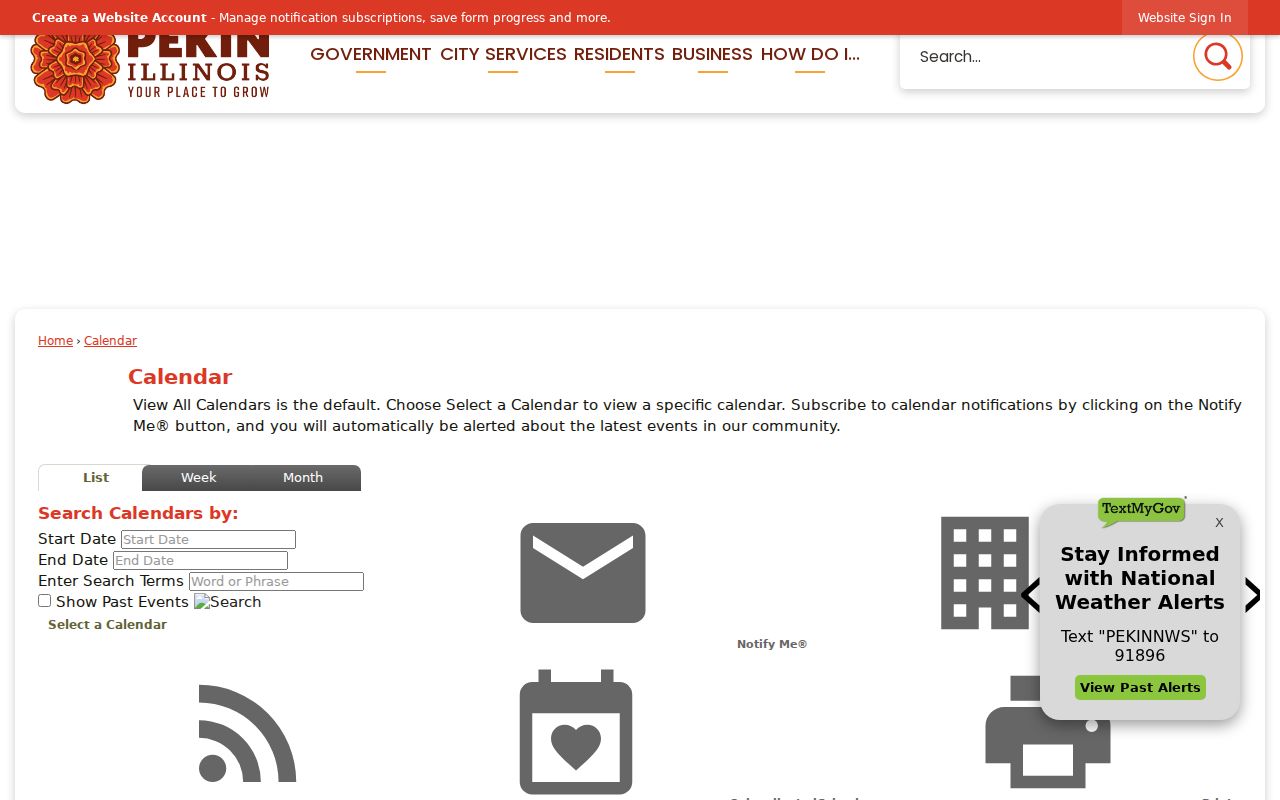
The calendar supplies civic context for a block without claiming that event listings identify nearby residents.
Pekin Block Permit Records
A building project, address discrepancy, or code question belongs with the city department that keeps the record. Pekin's permit page provides application and property-project guidance, but the research did not locate a public result index by person or address. Call Community Development at 309-478-5353 or submit a defined city FOIA request with the street address, date range, parcel, and desired record type.
This is a separate access channel from GIS. The map can show the parcel and planning layers, while the city may hold the permit or administrative file. At the counter or by request, ask for a specific permit, addressing record, inspection record, or code file rather than a broad list of people.
The Pekin permit guidance page is captured here.
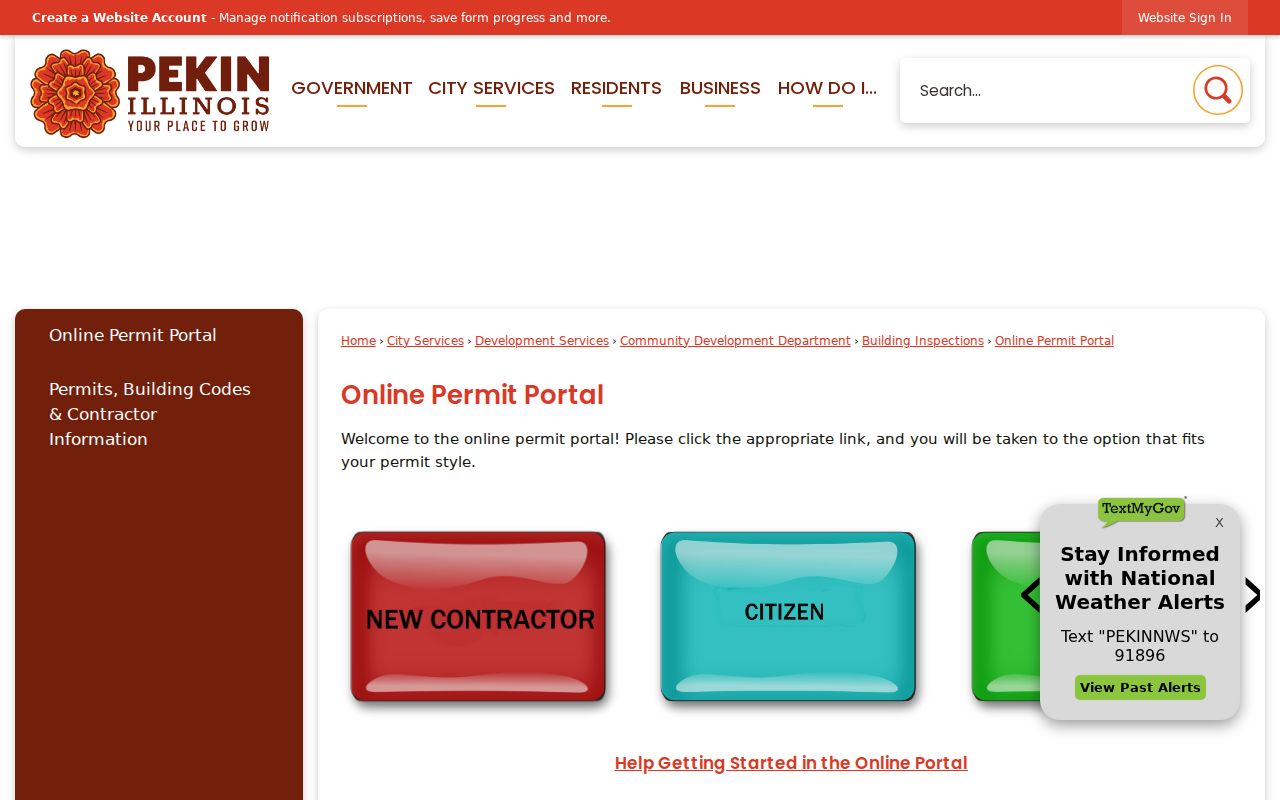
The captured page identifies the official route for block-level project questions even though it is not a searchable resident index.
Pekin Neighbors Across Map Years
Pekin's map stack makes a historic block unusually traceable. University of Illinois Sanborn sets cover 1885, 1892, 1898, 1903, 1909, 1916, and 1925. They show footprints, construction, openings, uses, block or house numbers, and fire-water details. The county GIS adds aerial basemaps from 1939, 2004, 2011, 2015, 2019, and 2023.
Maps establish physical neighbors, not named households. Pair a Sanborn sheet with the correct city directory year. Root's 1861 volume used corner descriptions, numbered addresses appear by 1887, and the 1903-04 Bates volume provides the first documented cross-referenced Pekin street index. Verify a directory OCR hit against its scanned page.
Pekin Public Library, TCGHS, University of Illinois digital collections, and Illinois State Archives/IRAD form the fallback chain for sheets or directories that are not fully searchable online. Ask the library for an exact year, title, page, or block when possible.
Pekin Neighbor Sources Compared
Official records and commercial compilations answer different questions. An official parcel row has a named custodian, defined fields, and a visible purpose. A commercial neighbor tool may combine stale material without showing how a name was matched. Use the minimum official source that answers the lawful personal or civic question.
| Source type | Strength | Main limit |
|---|---|---|
| County GIS and assessment | Dated parcel, site, owner, district, and tax fields | Not proof of occupancy or title |
| City and community records | Named public custodian or organization | No complete neighbor roster found |
| Historical directory and map | Publication-year names and physical block context | Not current |
| Commercial compilation | May combine many sources | Source date, matching, and correction path may be unclear |
Protect Privacy of Pekin Neighbors
Public does not mean unrestricted. Illinois voter-file distribution has statutory political and governmental limits, and the public voter form is designed to check known registration information, not create a block roster. Birth records, protected court matters, and other controlled records remain subject to their own laws. Do not combine unrelated fields into a profile.
The Illinois Address Confidentiality Program can provide eligible survivors with a substitute address and mail forwarding. It generally lasts four years and can be renewed, but it cannot erase information that was already public and does not remove property records. If an exposed record creates danger, contact the originating custodian or the Attorney General's program rather than republishing it.
Lawful use. Research Pekin neighbors for a legitimate personal, family-history, safety, or civic purpose. Never use an address record to watch, threaten, harass, or harm anyone.
A missing or different name may reflect a move, a remote owner, an entity, a protected record, a map update, or an index gap. Report only what the dated source shows. For corrections, preserve the source and date, identify the custodian, and ask about the proper correction, sealing, redaction, or confidentiality process.